Local GuidesWater Damage
Why does my basement flood every time it rains in Willimansett
If your Willimansett basement floods every time it rains, the cause is usually a specific combination of old clay drain tile, grading, and sump failure. Here is how to fix it.
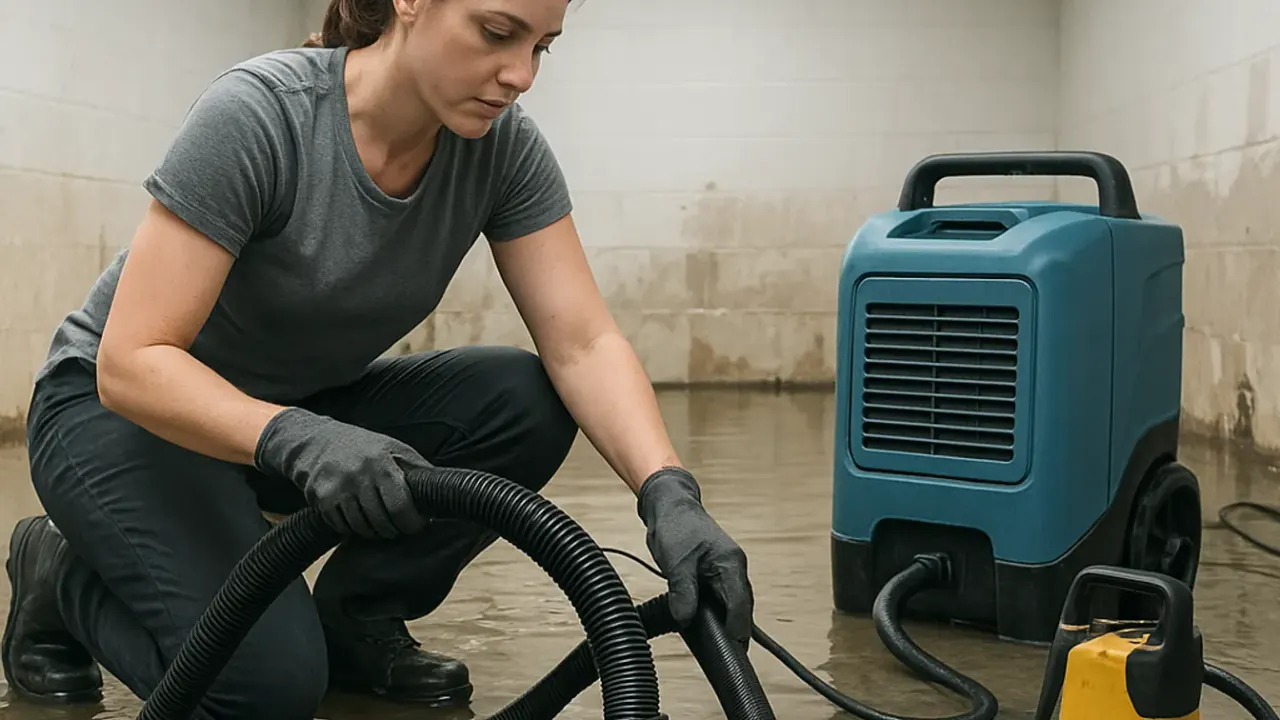
Your basement floods every time it rains in Willimansett because stormwater is finding a path to your foundation faster than your drainage system can move it away. That path is almost always one of five things: failed clay drain tile, a dead or undersized sump pump, negative grading, a cracked or unsealed foundation, or a backed-up municipal storm line on your street. The rest of this post walks through how we diagnose each one in Willimansett, what it costs to fix in 2026, and what you can do yourself before the next storm.
The short answer: why Willimansett basements flood after rain
Basement flooding after rain in Willimansett is a drainage problem, not a basement problem. Water pools against your foundation because the ground around your house can't absorb or redirect it, and once that water reaches the wall, hydrostatic pressure pushes it through any crack, joint, or floor seam it can find.
Willimansett sits low along the Connecticut River, and much of the neighborhood was built between the 1890s and the 1950s. That matters. Homes from that era were typically drained with clay tile or cast-iron perimeter drains that have since collapsed, silted in, or simply stopped connecting to anything. Add a hundred years of repaving, regrading, and new construction uphill from you, and the stormwater that used to soak into open ground now runs straight toward your foundation.
So the honest answer to "why does my basement flood every time it rains in Willimansett MA" is: the water has nowhere else to go, and your house is the lowest point on the block.
The five causes we find in Willimansett basements
After enough calls in this neighborhood, the same five problems show up again and again. We check all five on every job because fixing four of them and missing the fifth means you'll be calling us back in October.
1. Failed clay or cast-iron perimeter drain tile
Original drain tile around a Willimansett foundation was laid in short clay sections with open joints. Tree roots crack them, silt fills them, and after 80-plus years they stop flowing. When that happens, groundwater has no collection point, so it rises against the footing until it finds the easiest entry - usually the cove joint where the floor meets the wall.
2. A sump pump that quits at the worst time
Most sump pumps in this area last 7 to 10 years. The failure mode is predictable: the float sticks, the check valve fails, or the pump loses power during the exact storm that's flooding your neighborhood. If your pump runs constantly during a light rain, it's already undersized or the pit is filling faster than it can discharge.
3. Grading that slopes toward the house
We measure this on every estimate. Soil should drop at least 6 inches over the first 10 feet away from the foundation. In Willimansett, decades of mulch, new sidewalks, and driveway repaving have pushed grade the wrong way on a lot of lots. Water that should sheet away from the house instead ponds against the sill.
4. Foundation cracks, porous block, and failed window wells
Poured concrete cracks at shrinkage points. Block foundations wick water through the mortar joints. Both are common here. Window wells without covers collect roof runoff and dump it directly against the basement wall - a two-inch rain can fill a well in minutes.
5. Municipal storm sewer backup
When the city storm line on your street surcharges during a heavy rain, water can push back through your floor drain or a low-level laundry standpipe. This is the one cause you can't fix with grading or a sump pump alone - it needs a backwater valve on the main line.
How to stop basement flooding in Willimansett
Stopping basement flooding in Willimansett means interrupting the water before it reaches the wall, then giving whatever gets through a fast way out. You don't need every fix on this list - you need the two or three that match your actual cause.
- Extend downspouts 6 to 10 feet from the foundation. This is the cheapest fix and the one most homeowners skip. A single downspout dumping at the wall can put 500 gallons against your foundation in a one-inch storm.
- Regrade the first 10 feet. Add compacted soil so the surface drops 6 inches away from the house. Do not bury the siding - leave 6 inches of foundation visible.
- Install or upgrade a sump pump with a battery backup. A 1/3 HP pump handles most residential pits; a backup sump keeps you dry when the power goes out, which is exactly when storms hit.
- Add a backwater valve on the main sewer line. This is the only reliable fix for municipal backup. Most Chicopee homes don't have one.
- Seal cracks and cove joints from the inside. Hydraulic cement and urethane injection stop seepage, but only after the exterior drainage is handled.
- Clean or replace perimeter drain tile. On older Willimansett homes, this is often the real fix - and the most expensive one.
If your basement is already wet, the priority flips: get the water out and the structure dry before you spend a dollar on prevention. Our team handles water damage restoration Chicopee MA calls every week in this neighborhood, and we can tell you within an hour of walking in whether you're looking at a drainage fix, a pump replacement, or both.
What to do in the first hour of a flooded basement
The first hour decides whether you're looking at a few hundred dollars of cleanup or a full rebuild. Mold can begin colonizing wet drywall and carpet within 24 to 48 hours, and standing water wicks up wall cavities faster than most people expect.
- Kill the power to the basement at the breaker - but only if you can reach the panel without stepping in water. If you can't, stay out and call an electrician.
- Document everything. Photos of the water line on the wall, damaged furniture, and any ruined belongings. Your insurance adjuster will want them.
- Stop adding water. Shut off the main if the source might be a supply line, and check that the sump pump is actually running.
- Get the standing water out. A wet/dry shop vac handles an inch or two. Anything deeper needs a truck-mounted extractor - that's what we bring on emergency water removal Chicopee MA calls.
- Start air movement. Box fans and a dehumidifier slow the damage while you wait for help. Keep windows closed if it's still raining.
Don't wait to see if it dries on its own. It won't. Basement concrete releases moisture for weeks, and the smell that shows up in week two is the mold you didn't see in week one.
How much does basement flood cleanup cost in Willimansett?
Typical 2026 pricing for basement flood cleanup in Willimansett runs $1,200 to $3,500 for a standard 500 to 1,000 square foot basement with an inch or two of clean water. That covers extraction, industrial drying, and moisture monitoring over three to five days.
Here's how the numbers break down in this area:
- Water extraction only: $400 to $900 for a small basement, one visit.
- Extraction plus drying equipment: $1,200 to $2,500, with equipment on site 3 to 5 days.
- Flooded basement cleanup with contaminated water (sewage backup or river water): $2,500 to $6,000, because everything porous has to be removed and the space disinfected.
- Drywall removal and replacement: $3 to $6 per square foot after water wicks above the baseboard line.
- Sump pump replacement: $450 to $900 installed, including a new check valve and discharge line.
Most homeowner policies cover sudden and accidental discharge - a failed sump pump or burst pipe - but not gradual seepage or surface flooding. If your basement floods every time it rains, that pattern is usually classified as seepage, which is why so many Willimansett homeowners end up paying out of pocket. Fixing the drainage is cheaper than fighting the insurance company.
Common mistakes that make basement flooding worse
We see the same handful of mistakes on almost every flooded basement call in Willimansett, and each one adds cost.
- Running a sump pump into the floor drain. That water goes right back into the system that's already surcharging. Discharge to the yard, at least 10 feet from the foundation.
- Sealing the inside before fixing the outside. Interior waterproofing paint traps water in the block and pushes it higher up the wall.
- Piling snow against the foundation in winter. That's a slow-release flood when it melts in March.
- Ignoring the first small seep. A damp cove joint in October is a flooded floor in April.
- Letting a dehumidifier run without a drain line. It fills, shuts off, and the room stays wet.
If you've already got water sitting on the floor, the cleanup matters as much as the fix. Sewage-contaminated water needs more than a shop vac - it needs proper disinfection and disposal, which is what our sewage backup cleanup Chicopee MA crews handle.
When to call a professional
Call a professional when the water is deeper than two inches, when it's contaminated, when it's been sitting more than 24 hours, or when your sump pump can't keep up during a normal rain. Those four conditions mean the damage is already spreading into materials you can't dry with fans.
Our team at Giant Restoration Pros works this neighborhood constantly. We extract the water, set drying equipment, and tell you honestly whether you're looking at a drainage fix or a full waterproofing job. We also serve homeowners across Water Damage Removal in Willimansett and the surrounding Chicopee neighborhoods, so we know which streets flood first and why.
Frequently Asked Questions
Why does my basement flood every time it rains in Willimansett MA?
Because stormwater is reaching your foundation faster than your drainage can move it. In Willimansett, the usual culprits are failed clay drain tile, a dead sump pump, grading that slopes toward the house, or a surcharging municipal storm line. Fixing the drainage stops the flooding; drying the basement only treats the symptom.
How can I prevent basement flooding in Willimansett?
Extend downspouts 6 to 10 feet from the foundation, regrade so soil drops 6 inches over 10 feet, install a sump pump with a battery backup, and add a backwater valve on the main sewer line. Those four steps prevent most rain-driven flooding in this neighborhood. Interior sealants help only after exterior drainage is handled.
Who do I call for basement water removal in Willimansett MA?
Call a licensed water damage restoration company that can extract standing water, set industrial drying equipment, and monitor moisture over several days. Giant Restoration Pros handles emergency basement flood cleanup in Willimansett and across Chicopee, typically arriving within 60 to 90 minutes of your call.
How much does basement flood cleanup cost in Willimansett?
Expect $1,200 to $3,500 in 2026 for a typical 500 to 1,000 square foot basement with an inch or two of clean water, including extraction and 3 to 5 days of drying. Contaminated water from sewage or river flooding pushes the range to $2,500 to $6,000 because porous materials must be removed.
Will my insurance cover a flooded basement in Willimansett?
Most policies cover sudden failures like a burst pipe or a sump pump that quits, but not gradual seepage or surface flooding. If your basement floods every time it rains, insurers usually classify it as seepage and deny the claim. Fixing the drainage is the more reliable long-term answer.
Get help with Water Damage Removal in Chicopee
If your Willimansett basement is wet right now, we can be there today. We extract the water, dry the structure, and tell you exactly what caused the flood so it doesn't happen again next storm.
Call Giant Restoration Pros at 413-284-8111 for emergency basement water removal in Willimansett and across Chicopee.